
SVA quoted in Asia Sentinel article “In Myanmar Polls, International Approval Doesn’t Matter”
In Myanmar Polls, International Approval Doesn't Matter
Junta attempts to mollify China, India, and to consolidate power
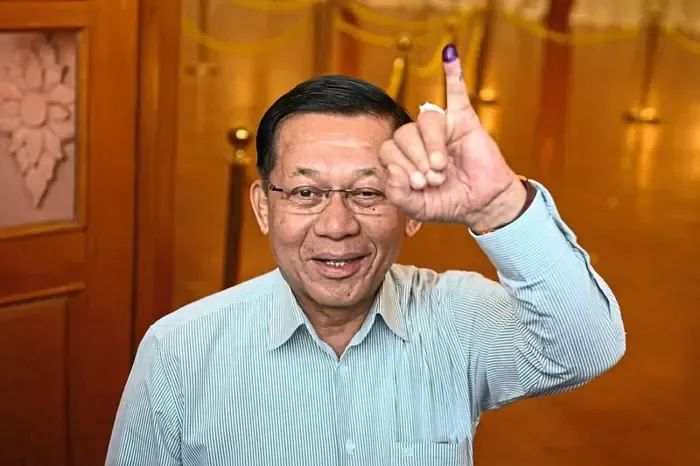
Myanmar Sunday finished up its three-stage election amid international criticism that characterized it as a sham, with much of the outside world wondering why the junta had bothered with a patently fraudulent exercise. Opposition parties weren’t allowed to participate, with only perhaps 25 percent of the country under full government control.
Voting in localities held by the rebels was either impossible or negligible, with only 265 of 330 townships voting nationwide, and with heavy fighting, airstrikes and resistance raging across large parts of the country, leaving many polling stations closed, relocated or deserted.
The government has claimed a landslide, with turnout officially reported at roughly 55 percent, significantly lower than the 70 percent seen in the 2015 and 2020 democratic elections. Senior General Min Aung Hlaing – who has been indicted by the International Criminal Court for genocide – is widely expected to trade his uniform for civilian garb to assume the presidency when the new parliament convenes, likely in March, despite the fact that the United Nations, the European Union and western governments have condemned the polls as illegitimate. Only China, which quietly sought unsuccessfully to lobby ASEAN capitals to at least send observers, and Russia and Belarus sent poll watchers.
“I think the junta aimed to present the election in the same light as previous democratically-run polls, which resulted in a transition that restored stability and opened the economy,” said Michael Vatikiotis, a private diplomat and author who contributes to Asia Sentinel. “But the difference is that back then, [then-military leader] Than Shwe stepped down and [his successor] Thein Sein turned out to be a reformer. No one sees this happening quite the same way, even if they want us to believe so.”
Consolidating power
The answer is that the polls weren’t intended for the world at large. They were intended as an attempt to consolidate power by the junta and its allies. While the junta, which overthrew representative government and democracy in 2021 and sparked a bloody civil war which it has failed to quell, presents the election as a return to “disciplined democracy,” the actual gains are largely strategic and internal rather than a restoration of popular civilian rule.
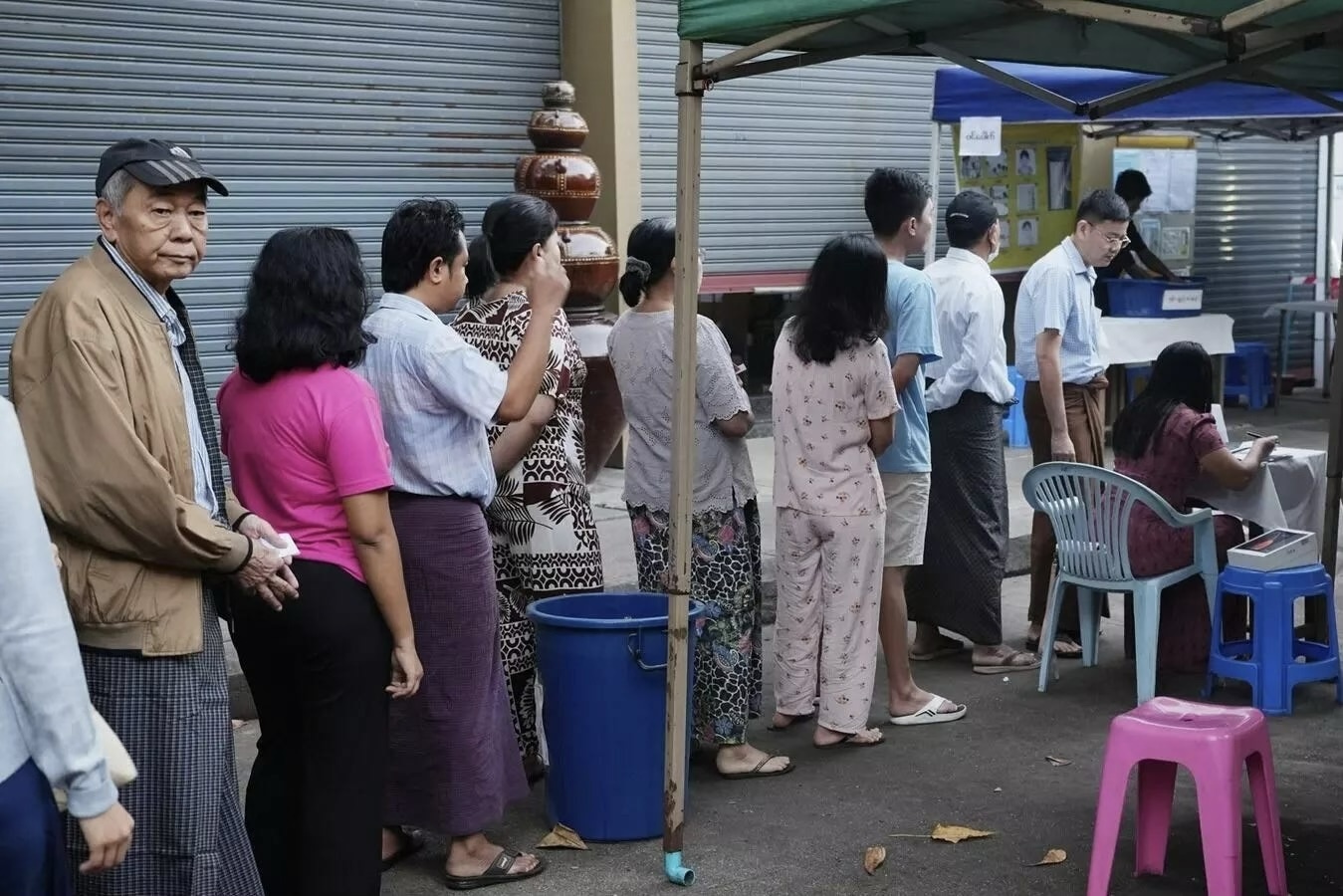
With the army-backed Union Solidarity and Development Party securing an overwhelming majority of the votes, combined with the 25 percent of seats reserved for the military by the constitution, the junta now has guaranteed control over the national parliament and can rebrand itself, however fictitiously, as under civilian rule with a formally elected government.
“This was for local civilian consumption, albeit of limited PR value,” said Steve Vickers, CEO of the Hong Kong-based Steve Vickers and Associates political and corporate risk consultancy. “It gains continued support from [China] for simple, practical reasons associated with trade and supply. It takes ASEAN pressure off their backs (cynically) for a short while. Internally, within Myanmar, it’s propaganda to give the military self-confidence with their own forces somewhat flagging.”
For the junta, analysts say, the election seeks to reassure the rank-and-file and civil servants that the military is operating under a constitutional framework, helping to shore up internal morale amid the ongoing civil war. Some internal stakeholders including business interests are said to hope the process might lead to more predictable, if authoritarian governance and reduced security in areas under military control.
The polls have cemented the previous dissolution of the National League for Democracy headed by the imprisoned democracy icon Aung San Suu Kyi and other major opposition groups that weren’t allowed to participate, effectively removing them from the formal political landscape. Its renaming from the “State Administration Council” to the “National Security and Peace Commission” is regarded as a cosmetic rebrand attempt designed unsuccessfully to create a veneer of legitimacy and dodge international sanctions.
The payoff for the players
Will it pay off? For China, it likely means more political involvement and a resumption of stalled Belt and Road Initiative-related projects. For India, whose diplomats must have held their noses while calling for “free and fair” elections, ratifying the polls preserves a working relationship with the junta, which helps to manage hostile insurgent groups that use Myanmar’s 1,600-km border as a refuge. A functioning administration ensures the continuation of vital infrastructure projects like the Kaladan Multi-Modal Transit Transport Project and the India-Myanmar-Thailand Trilateral Highway. But mainly, maintaining ties and signaling acceptance of the election results is designed to prevent Myanmar from becoming overly dependent on rival China, which very much has Myanmar in its sphere of interest.
“The only major thing the junta seems to have derived from this entire exercise is its claim to have restarted the political system, aligning with the roadmap it declared shortly after the coup five years ago,” said a Bangkok-based political analyst who declined to be named. “But nothing has changed regarding the ongoing civil war, the military’s continued commission of war crimes, or the determination of ordinary Burmese people to oust military rule. Min Aung Hlaing declared in Mandalay on Sunday that he ‘recognizes the people’s vote,’ but the Burmese people weren’t fooled, and do not recognize this charade as a legitimate election. So, whatever the junta claims when they convene the parliament in April, the political turbulence and the people’s war against the military will continue unabated.”
While “the people’s war continues unabated,” it isn’t going anywhere for either side. The junta faces severe, widespread opposition from armed resistance groups but retains control over major cities and administrative centers. It is attempting to reclaim areas through forced conscription of more than 60,000 inexperienced recruits, helping them to stabilize some fronts, and through intensified, drone-guided airstrikes that are more accurate but have resulted in a massive humanitarian crisis, with rampant insecurity across the nation. More than 100,000 homes have been burned by the military, and the conflict has severely disrupted education and healthcare, specifically in areas controlled by opposition forces.
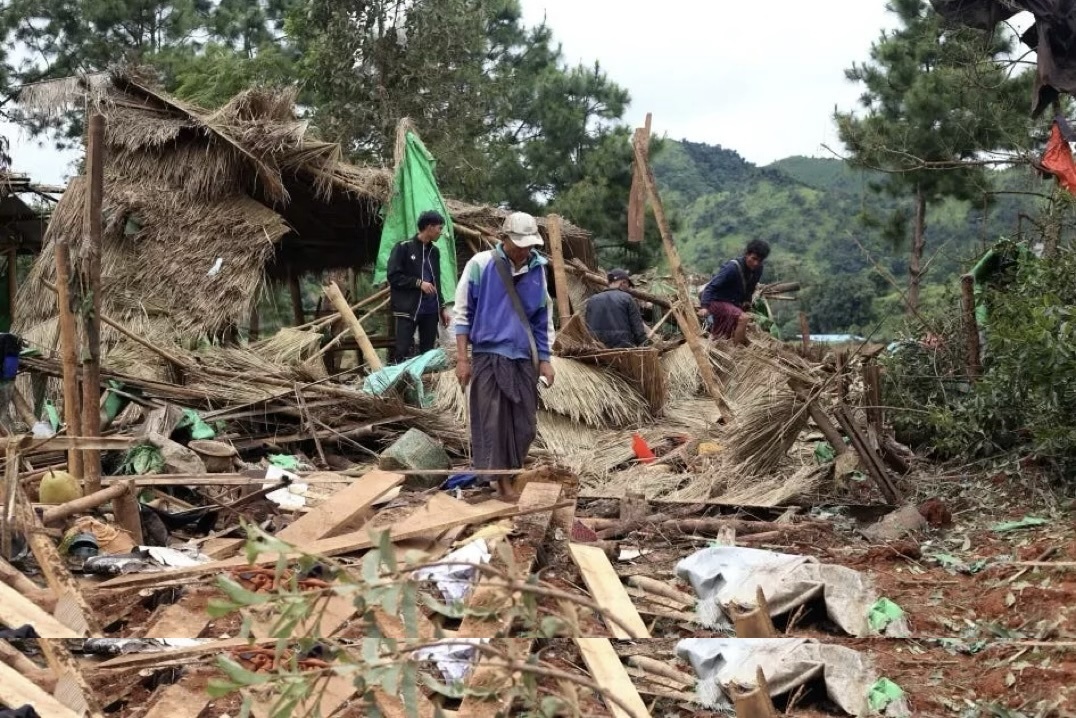
Militarily, the situation remains highly unstable, with constant clashes, airstrikes, and significant displacement of civilians. The Armed Conflict Location & Event Data website estimates total deaths including combatants and civilians at 89,200 with more than 3.5 million people internally displaced since 2021, as Asia Sentinel reported in December.
Many pro-democracy leaders have left for Thailand, Bangladesh and India to escape military atrocities. As it rages, the government has never had the resources or control to recover from a devastating March 28 7.7 magnitude earthquake that is estimated to have left 4.3 million people in need of clean water and sanitation assistance, forcing many to resort to unsafe sources for their daily needs.
“They appear to think that their patently rigged elections will bring them the legitimacy they crave but ASEAN’s refusal to legitimize the elections by sending observers and/or endorsing the results has left them even more isolated than ever,” said a former high-ranking diplomat. “In the end, it was an exercise in futility.”